Sunday, 28 August 2016

Friday, 26 August 2016

THE VISIT TO SELOUS & RUAHA: Twice the wild dog fun in Tanzania

Written by: Flo Montgomery
I have visited Selous Game Reserve and Ruaha National Park in southern Tanzania nearly every year since I joined Adventure Camps, and on my visits I always hope to see the elusive African hunting dogs (Lycaon pictus), which are commonly known as wild dogs. They are now one of the most endangered species on the planet, with only around 6,000 remaining – most of which are in Southern Africa.
I will always remember I trip I took in 2005 – I flew from Dar es Salaam to Mtemere airstrip in Selous where the smiling pilot pointed out the vehicle that would take us to Selous Impala Camp. We soon rolled up to the spacious camp with its eight green tents on platforms that were hidden in the lush bush, from which we could see the sparkling Rufiji River.
Tented accommodation at Selous Impala Camp ©Pietro Luraschi
I love the décor of this camp – it has a distinctly Out of Africa style, with an emphasis on sturdy canvas tents furnished with kikoys, polished wood, brass, and comfortable sofas and tables spread out in the attractive lodge area. With its open verandas, it’s the perfect place to dine under the stars with the mighty river just a few metres away.
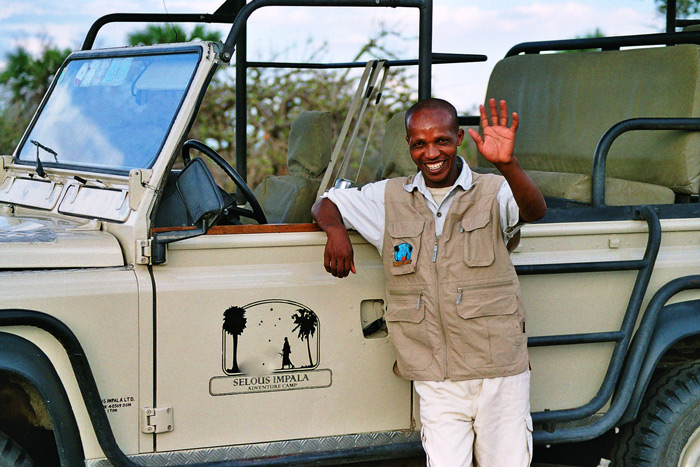
Vincent Horry ©Flo Montgomery
Selous Impala guide, Vincent Horry ©Flo Montgomery
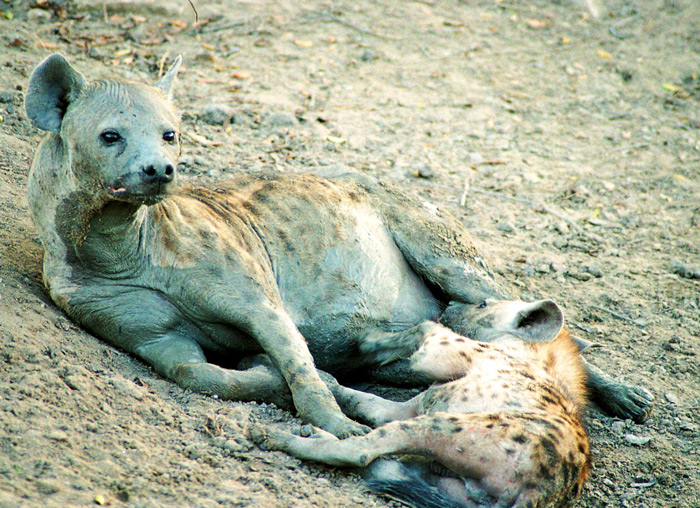
A hyena mother and baby ©Flo Montgomery
We drove on further as evening drew closer and the sky darkened. All at once I turned my head and there they were – the distinctive black and fawn patterned heads with large rounded ears – two wild dog scouts sitting on a mound.
A wild dog relaxes on a mound ©Flo Montgomery
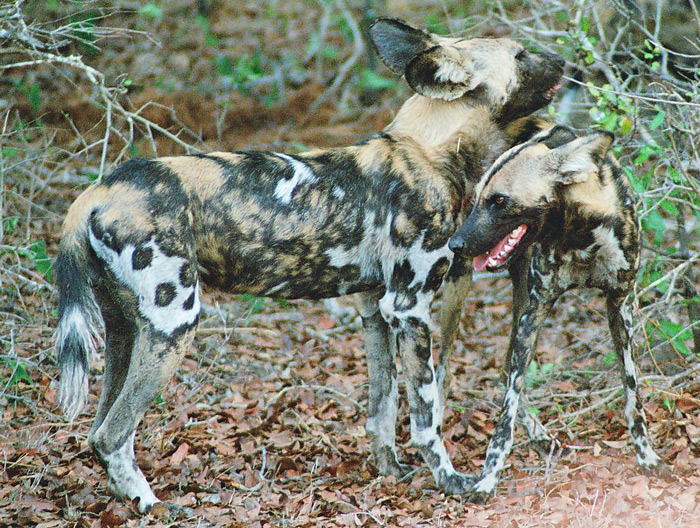
We knew that there would be more of them around as wild dogs live and hunt as a pack, and sure enough we counted 10 wild dogs in total, peacefully resting and waiting for the cool of evening when it would be time to hunt. In spite of the lack of rain and the dryness of the bush, they seemed to be in really good condition; their pelts thick and shiny. Some of the group had beautiful colouring – bright tan, pitch black, fawn and splashes of white.
A few of the younger ones were restless and hungry. We watched them for a long time and every so often some of them would jump up, start chivying the others, touching noses and generally meeting and greeting. Then they would all sit down again and appear to go to sleep.
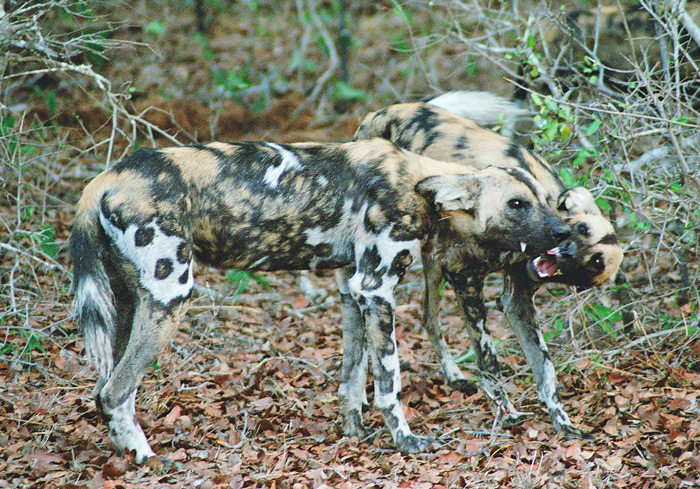
The fantastic coats of the painted wolves in Selous ©Flo Montgomery
wild-dogs-selous-flo-montgomery
©Flo Montgomery
We decided to leave them in peace and went to watch the sunset at the nearby lake before returning in time for a candlelit dinner at camp. “Watch out for elephants,” said the manager, as a Maasai guided me to my tent, carrying a strong torch in one hand and a spear in the other.
Next morning we took off on a game drive – Malcolm had heard that wild dogs had been seen not far away. I could not believe my luck when I saw my second pack in two days, in two different reserves!
Spotting wild dogs in Ruaha National Park ©Flo Montgomery
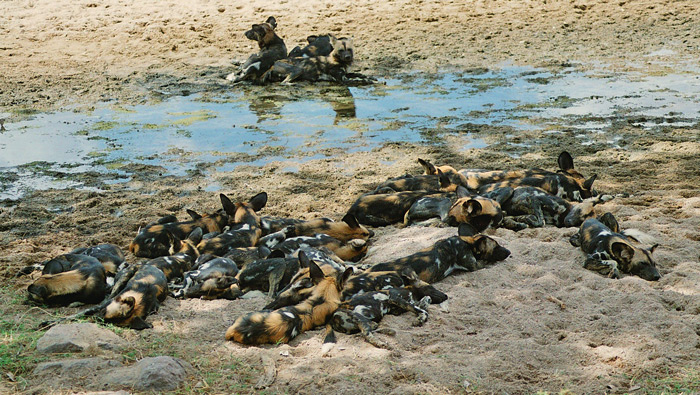
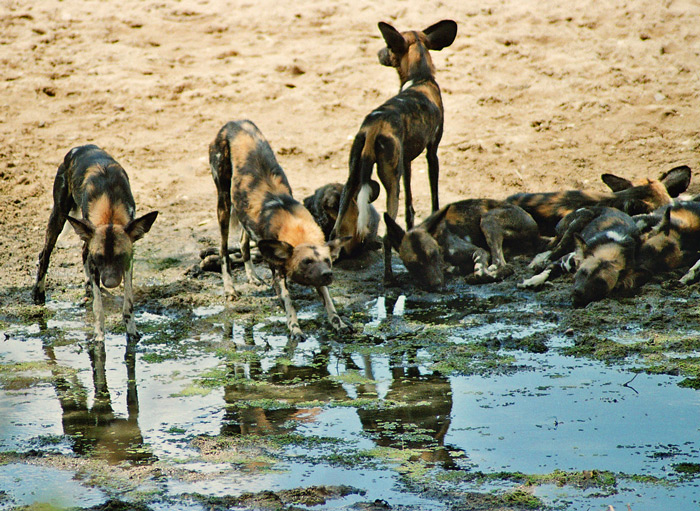
This group was larger than the one in Selous – about 29 were counted altogether, resting in the shade of a tree in the Mwagusi sand riverbed. It was magical. We watched them for hours and I felt I got to know them quite well. It was very hot and they lay panting, a mass of speckled furry bodies, half in and half out of a pool of water.
ruaha-wild-dog-pack-flo-montgomery
Wild dogs cool down in Ruaha ©Flo Montgomery
wild-dogs-ruaha-flo-montgomery
A large pack of wild dogs relax in Ruaha ©Flo Montgomery
Every so often they would nuzzle each other, uttering occasional ‘yips’. A giraffe came to drink nearby but kept an extremely wary eye on them. One youngster got up and attempted to hunt it, but received no support from its brothers and sisters, so withdrew into the shade again and went to sleep.
flo-montgomery-wild-dogs-ruaha
Wild dogs rest in the shade of a tree in the Mwagusi riverbed ©Flo Montgomery
I stayed two nights at Mdonya and was sad to leave – the only way I could bring myself to say goodbye was by telling myself that I would be back there often. Little did I know that I would see the painted dogs again in 2009 and 2012. But that is another story
5 reasons to visit Arusha National Park

The 552km² Arusha National Park is located in northern Tanzania and is often overlooked by many safari goers, despite boasting a variety of fascinating habitats. Although lions don’t call this park home, Arusha still offers visitors the chance to spot the most elusive member of the Big Five – the leopard – in the early morning and late afternoon.
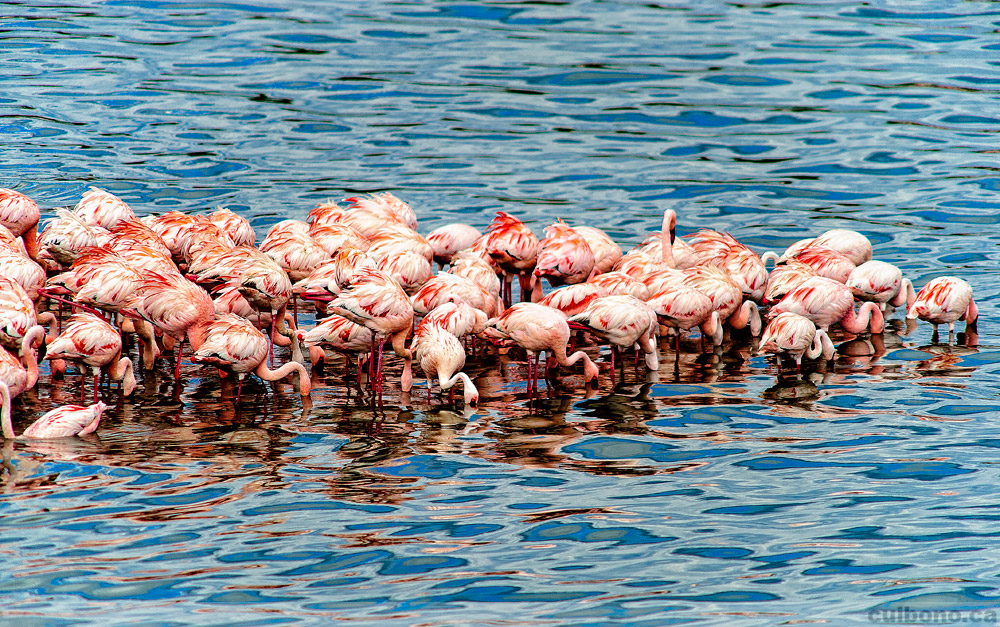
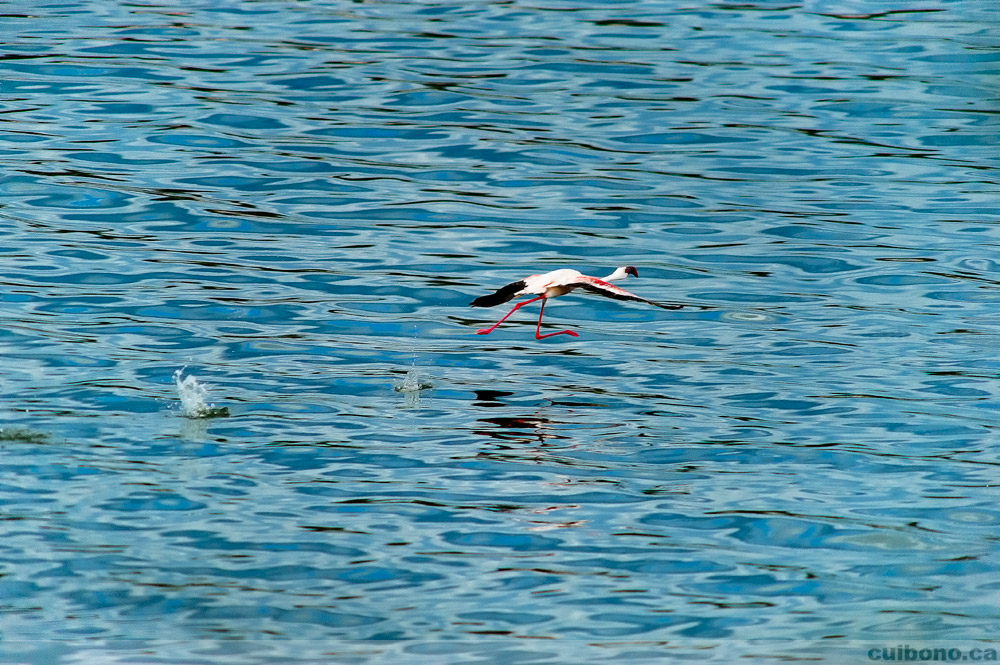
Arusha is also home to a large population of flamingos, which often tinge the Momella Lakes a beautiful shade of pink, but here are five other reasons why Elyon Tours thinks you should add this Tanzanian park to your Africa bucket list.
1. It’s home to unique primates
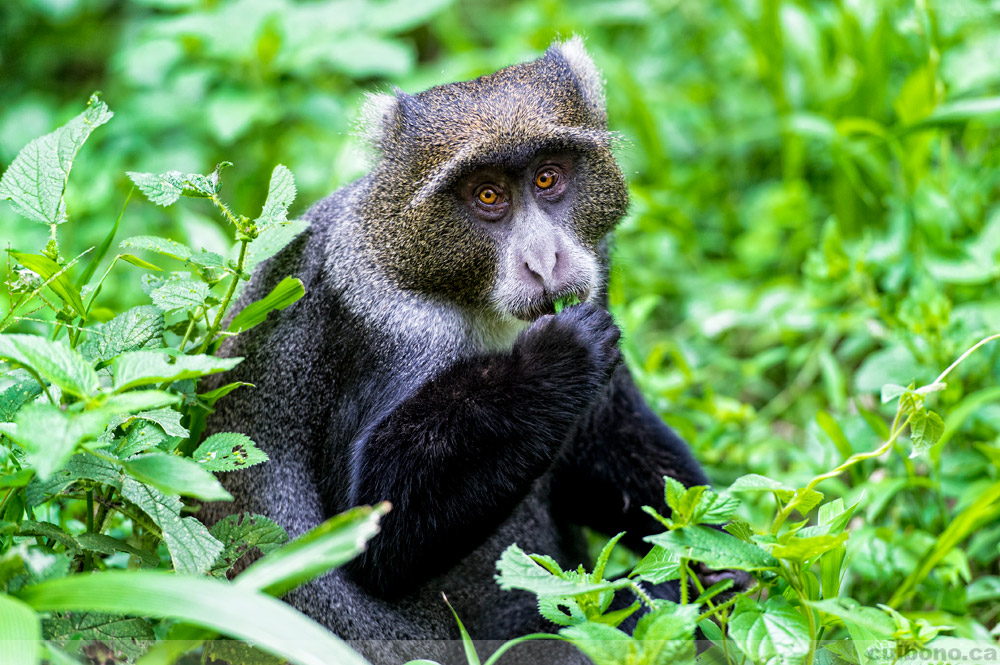
A game drive in this national park will give visitors the chance to spot the blue monkeys that live in the thick montane forest. Due to its vegetation, this is also the only place in Tanzania’s northern safari circuit where the black and white colobus monkey can be seen!
2. Climb the second highest peak in Tanzania
Mount Meru is the second highest peak in the country and the fifth highest in Africa, standing at an altitude of 4,566 metres above sea level. Hikers who climb Mount Meru will be rewarded with unparalleled views of its famous neighbour, Mount Kilimanjaro, which are considered to be best between December and February. Although arguably an achievement in its own right, a climb up Mount Meru is also a great way to acclimatise before taking on Kili.
3. Spot a snow white baboon
If you’re really lucky, you may even spot an albino baboon at one of the water sources.
albino-baboon-arusha
4. It’s easily accessible
The park lies just a 40-minute drive from Arusha town and only approximately 60km from Kilimanjaro International Airport, which makes it the perfect place to start a safari tour in northern Tanzania or relax after a climb up Mount Kilimanjaro.
giraffe-arusha-national-park warthog-arusha
5. It has a crater!
Arusha National Park is known for the 2.4kilometre wide Ngurdoto Crater, which stands in the midst of the montane forest. The crater’s rocky cliffs enclose a wide marshy floor, which is dotted with herds of buffalo and warthog. While standing at the lookout point using a pair of binoculars, it should be easy to spot marsh birds and various herbivores grazing on the crater floor.
ngurdoto-crater ngurdoto-crater-viewpoint So don’t hesitate to include a trip to Arusha National Park on your itinerary the next time you visit Tanzania!

Thursday, 25 August 2016

KATIBU MKUU WA MALIASILI NA UTALII, MAJ. GEN. GAUDENCE MILANZI AMEWATAKA MAJANGILI WATAFUTE KAZI NYINGINE

 Katibu Mkuu wa Wizara ya Maliasili na Utalii Meja Jenerali Gaudence Milanzi akifunga mafunzo maalum ya kupambana na ujangili kwa Askari wanyamapori katika Pori la Akiba la Rungwa mkoani Singida jana. Mafunzo hayo yatawasaidia Askari wanyamapori kupata taarifa za kitenteligensia kwa ustadi wa hali ya juu katika kupambana na kukabiliana na majangili.
 Baadhi ya askari wanyamapori waliohitimu mafunzo wakiwa kwenye paredi jana katika Pori la Akiba la Rungwa mkoani Singida, Mafunzo hayo yatawasaidia Askari wanyamapori kupata taarifa za kitenteligensia kwa ustadi wa hali ya juu katika kupambana na kukabiliana na majangili.
 Askari wanyamapori wakionesha kwa vitendo wakati wa kuhitimu mafunzo maalumu yaliyofanyika katika Pori la Akiba la Rungwa Mkoani Singida yaliyohitimishwa jana wakionesha namna ya kupambana na majangili wakati wakiwakamata majangili
 7. Askari wanyamapori wakionesha kwa vitendo wakati wa kuhitimu mafunzo maalumu yaliyofanyika katika Pori la Akiba la Rungwa Mkoani Singida yaliyohitimishwa jana wakionesha namna ya kupambana na majangili wakati wakimkama ta jangili akiwa amejisalimisha yeye mwenyewe.
 Balozi wa Marekani nchini Tanzania, Mark Childress akizungumza wakati wa kufunga mafunzo maalumu ya ya kupambana na ujangili kwa Askari wanyamapori katika Pori la Akiba la Rungwa mkoani Singida jana. Mafunzo hayo yatawasaidia Askari wanyamapori kupata taarifa za kitenteligensia kwa ustadi wa hali ya juu katika kupambana na kukabiliana na majangili.
Mkurugenzi Mkuu wa Mamlaka ya Usimamizi wa wanyamapori Tanzania ( TAWA) Bw. Martin Loibook akizungumza wakati wa kufunga mafunzo maalumu ya ya kupambana na ujangili kwa Askari wanyamapori katika Pori la Akiba la Rungwa mkoani Singida jana. Mafunzo hayo yatawasaidia Askari wanyamapori kupata taarifa za kiitenteligensia kwa ustadi wa hali ya juu katika kupambana na kukabiliana na majangili.

Wednesday, 17 August 2016

Soroi Serengeti Lodge

 The newest property in our collection, Soroi Serengeti Lodge is set high on a natural plateau with endless views over the vast plains of Musabi, giving you a truly unforgettable African experience.
 Set high on a natural plateau with endless views of the Musabi Plains in the Western Corridor of the iconic Serengeti National Park. The architecture, design and modern décor of the thatched chalets built on the edge of the plateau make Soroi Serengeti Lodge unique, offering the visitor an unforgettable Serengeti safari experience.
 The three-tier decked main area, with swimming pool, fire place, open plan restaurant and kitchen, is where classic meals are served with care and attention. This Eco-Friendly Lodge uses solar hot water geysers, inverters with batteries and organic room amenities, ensuring a low carbon footprint.
FOR MORE VISIT>>http://www.mbalimbali.com/soroi-serengeti-lodge-mbali-mbali/